Tattoo regret can hit fast, sometimes within days of leaving the studio. If you’re already looking into laser removal for ink that’s barely healed, you’re not alone, and it’s a more common question than you’d think.
The short answer is that removal has to wait until your skin is fully healed, but exactly how long that takes depends on a few specific factors.
To put it simply, not right away. A brand new tattoo is essentially an open wound, even after it stops looking like one.
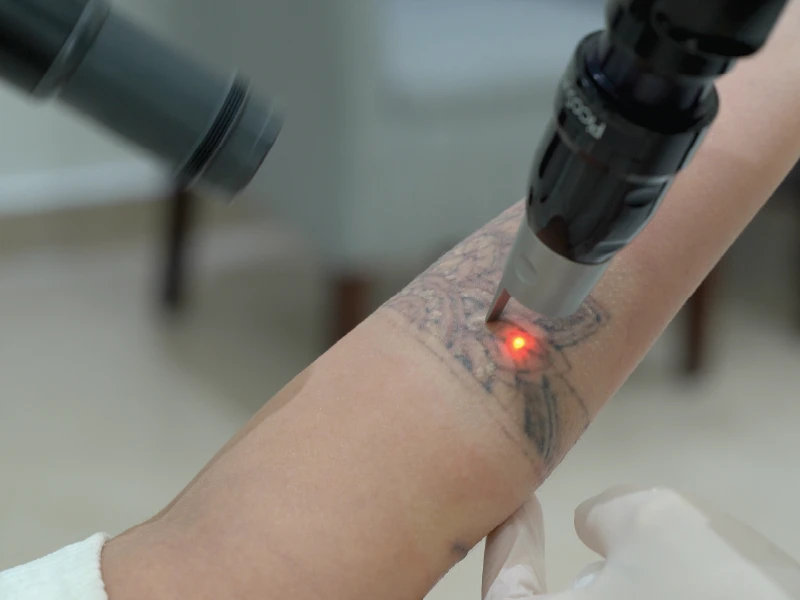
Laser removal works by targeting ink that has settled in the skin, and while your tattoo is still healing, that ink hasn’t fully settled and your skin hasn’t finished repairing itself.
Treating it too early doesn’t just risk a poor result, it can cause real damage, including burns, blistering and permanent scarring.
Most providers recommend waiting at least 6 to 8 weeks after getting a new tattoo before starting laser removal, and some recommend waiting up to 12 weeks depending on the tattoo and how your skin heals.
This isn’t an arbitrary number. It reflects roughly how long it takes for the skin’s outer layers to fully close and for the ink to settle into its resting position in the dermis. Starting before that window closes means treating skin that isn’t ready for it.
A few factors can shift your specific timeline:
- Tattoo Size: Larger tattoos generally need more healing time than small ones.
- Body Location: Areas with less circulation, like feet or ankles, tend to heal more slowly than areas like the upper arm.
- Ink Saturation: Densely inked tattoos take longer for the skin to fully process during healing.
- Individual Healing Speed: Age, skin type and overall health all affect how quickly your body recovers.
- Aftercare Quality: Following your tattoo artist’s aftercare instructions closely can help you heal on schedule rather than behind it.
Your removal provider can give you a more precise estimate once they’ve actually looked at your tattoo and skin.
Rushing into treatment on unhealed skin raises the risk of several complications.
For starters, the laser can cause excessive blistering if it hits skin that hasn’t finished repairing itself.
There’s also a higher risk of permanent discoloration. Freshly shattered ink particles can get trapped in new collagen as the skin heals, instead of clearing away from the body normally.
Early treatment also interrupts the skin’s natural healing process while it’s still underway, which raises the risk of scarring. Waiting until the skin has fully healed avoids that risk.
On top of the safety risks, treating too early usually affects the removal itself. It tends to make the overall process slower and more expensive, not faster, since poorly timed sessions are often less effective and may need to be repeated.
Once your provider confirms your skin has fully healed, with no redness, no swelling, no tenderness to the touch, you can book your first session.
The treatment itself is quick, often just a few minutes depending on the tattoo’s size. Afterward, you’ll go through a healing process similar to what you experienced after getting the tattoo. Some redness and swelling for the first day or so, followed by gradual fading as your body clears the broken-down ink over the following weeks.
According to NCBI, most tattoos require 4 to 15 sessions to fully clear, typically spaced 6 to 8 weeks apart to give your skin and immune system time to process the ink between treatments.
Newer tattoos often need more sessions than older, sun-faded ones, since the ink is still at full saturation. Dr. Hamid Taghaddos can give you a realistic session estimate after evaluating your tattoo’s size, colors and location.
At Medical Village, tattoo removal is typically performed using PicoWay or PicoSure Pro, both picosecond lasers built to break down ink more precisely than older technology.
PicoWay’s multiple wavelengths make it well suited to a wider range of ink colors and skin tones, while PicoSure Pro is often chosen for its speed and precision on more concentrated pigment. The right choice depends on your tattoo’s ink density, color range and your skin tone, all of which are assessed during consultation.
Regardless of which laser is used, treatment only begins once the tattoo has fully healed, ensuring the best possible outcome from the first session onward.
If you’re dealing with tattoo regret and want a clear, honest timeline for when you can safely start removal, Dr. Hamid Taghaddos and our team at Medical Village can assess your tattoo, explain what to expect during healing and help you plan your first session as soon as your skin is ready. Give us a call or fill out a contact form to get started!